

The training of large models through the capture of Internet data by AI has become part of the industry ‘ s indiscretionary rules, but has also given rise to copyright disputes. Recently, according to a foreign media report, the adult film producer Strike 3 Holdings and Counterlfe Media filed a major copyright infringement suit against Meta, the technology giant.
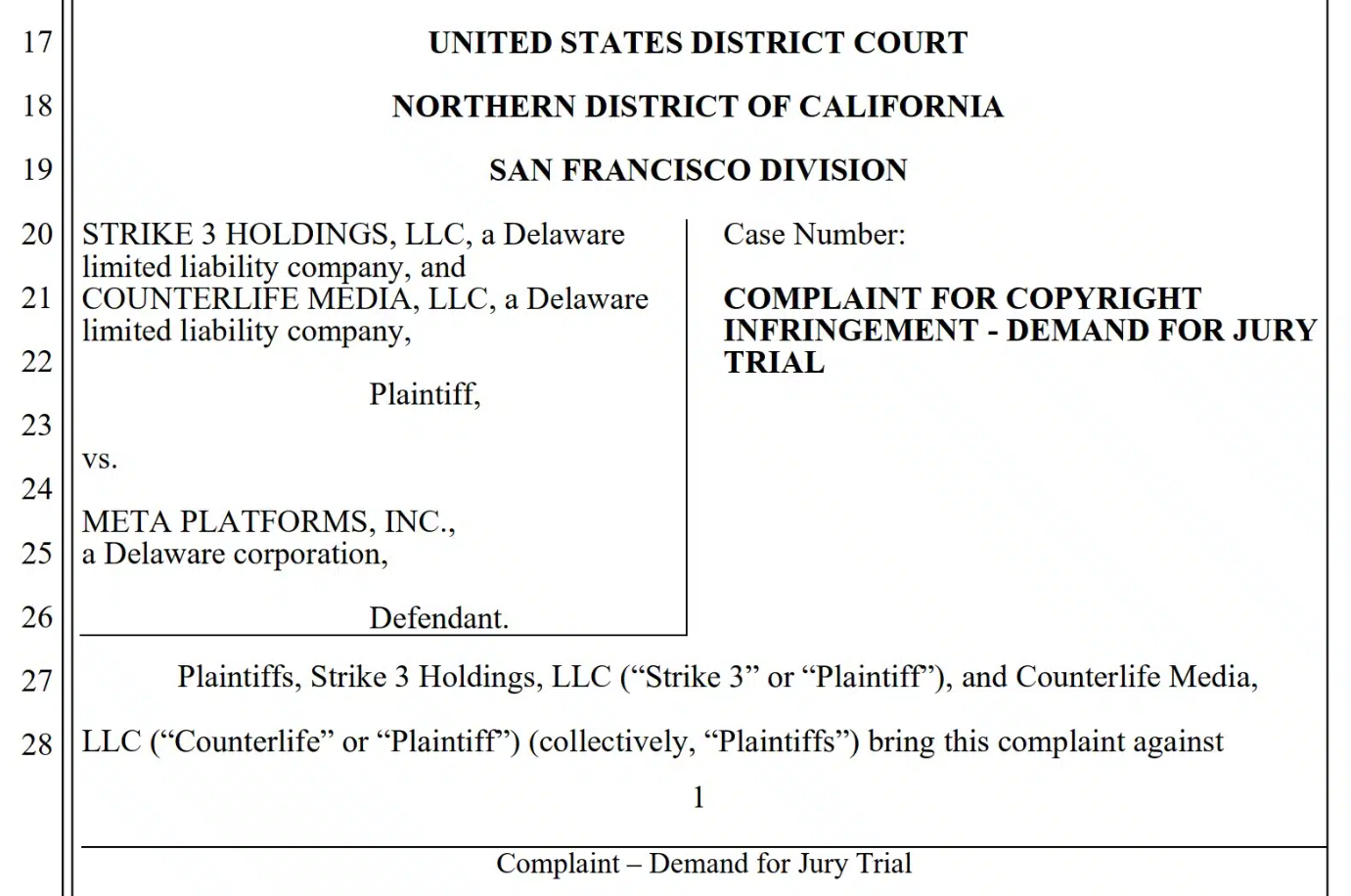
According to the reality of the California Federal Court proceedings, Strike 3 Holdings and Counterlfe Media charged Meta with downloading its film through BitTorrent for artificial intelligence training. The case involved at least 2396 films and potential damages could exceed $350 million (approximately RMB 2.53 billion) and up to $359 million (approximately RMB 2.6 billion).
Over the past two years, a number of lawsuits have been filed by various copyright parties against companies that develop AI models, with the core claim usually being the unauthorized use of training models for copyright-protected works (including texts, images and videos). The focus of the new lawsuit, initiated by two adult film-making companies, was on Meta being accused of downloading specific types of video from pirated sources.

Strike 3 Holdings and Counterlfe Media, who initiated the proceedings, are known under the banners of Viixen, Tushy, Blake and Deeper. Of these, Strike 3 is the most active copyright litigator in the United States, mainly for individual BitTorrent pirated users.
The proceedings surrounding Meta also revolved around the unauthorized BitTorrent risk, but on a very different scale. Two adult companies alleged that, since 2018, Meta had downloaded at least 2396 films in order to provide material for its AI training.
The indictment states: “The defendant downloaded the plaintiff’s work from pirated sources in order to obtain content to train him in `Meta Movie Gen’, large language models and other Meta AI models that rely on video training content.”
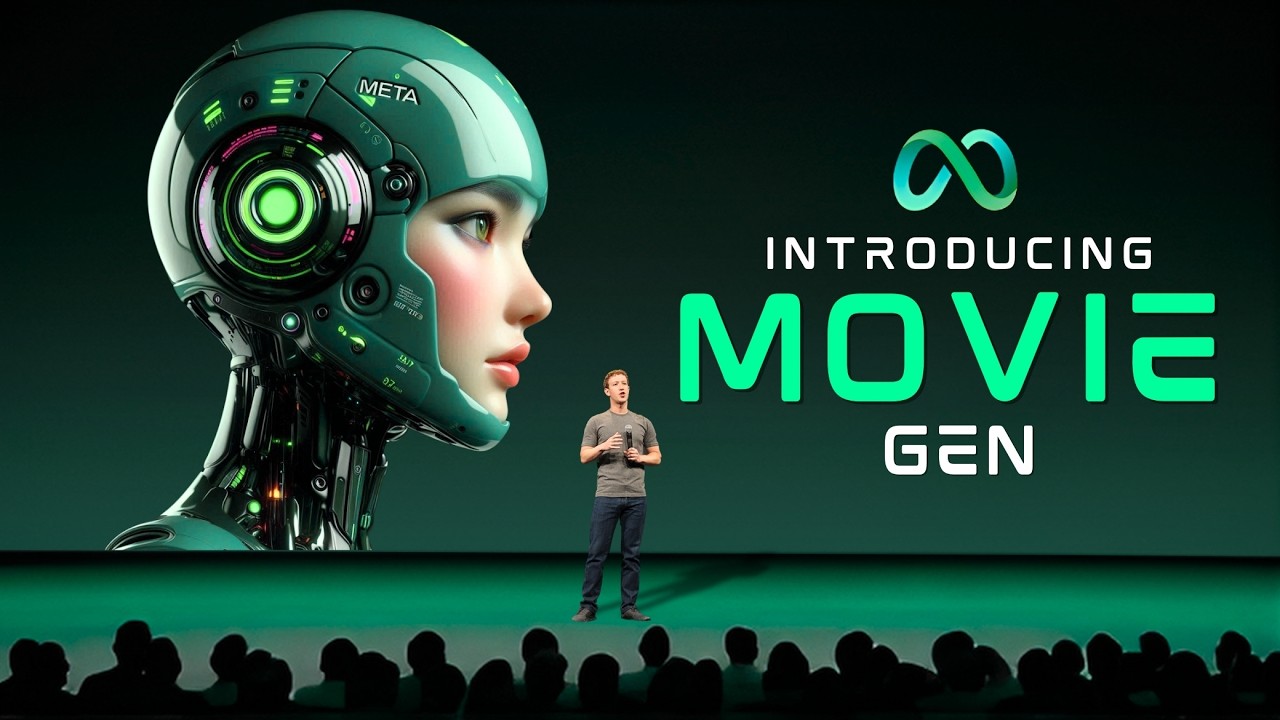
Adult producers are concerned that such training may eventually result in AI models producing films similar to their Hollywood level at lower cost. “As a result of such targeted training of plaintiffs, Meta’s AI Movie Gen may soon be able to produce a long film of exactly the same style and quality as the plaintiff, which cannot be replicated in other reality adult studios.”
Meta was accused of downloading these copyrighted works without permission and further accused of passing them on to third parties involved in the same BitTorrent group. The plaintiff claimed that its own internal tracking software, VXN Scan, supported this allegation.
BitTorrent transmits rely on a “TFT, tit for tat” algorithm, and participants are rewarded for sharing content with others (a significant increase in download speed). The complaint states that Meta continued to share pirated documents in order to use this mechanism.

“The defendant is clearly aware of the issue and the evidence disclosure procedure is likely to show that this is why the defendant chose to distribute the plaintiff’s content on an ongoing basis rather than simply buying a subscription or modifying BitTorrent’s client to download only.” The pleadings state that “Meta deliberately chose to plant the plaintiff’s film in order to take advantage of the faster speed of downloading so that it would be able to violate other content more quickly”.
These alleged violations were discovered by adult producers and brought to light by BitTorrent ‘ s activities in Meta in another lawsuit brought by several authors of books. In that case, Meta admitted to obtaining content from pirated sources.
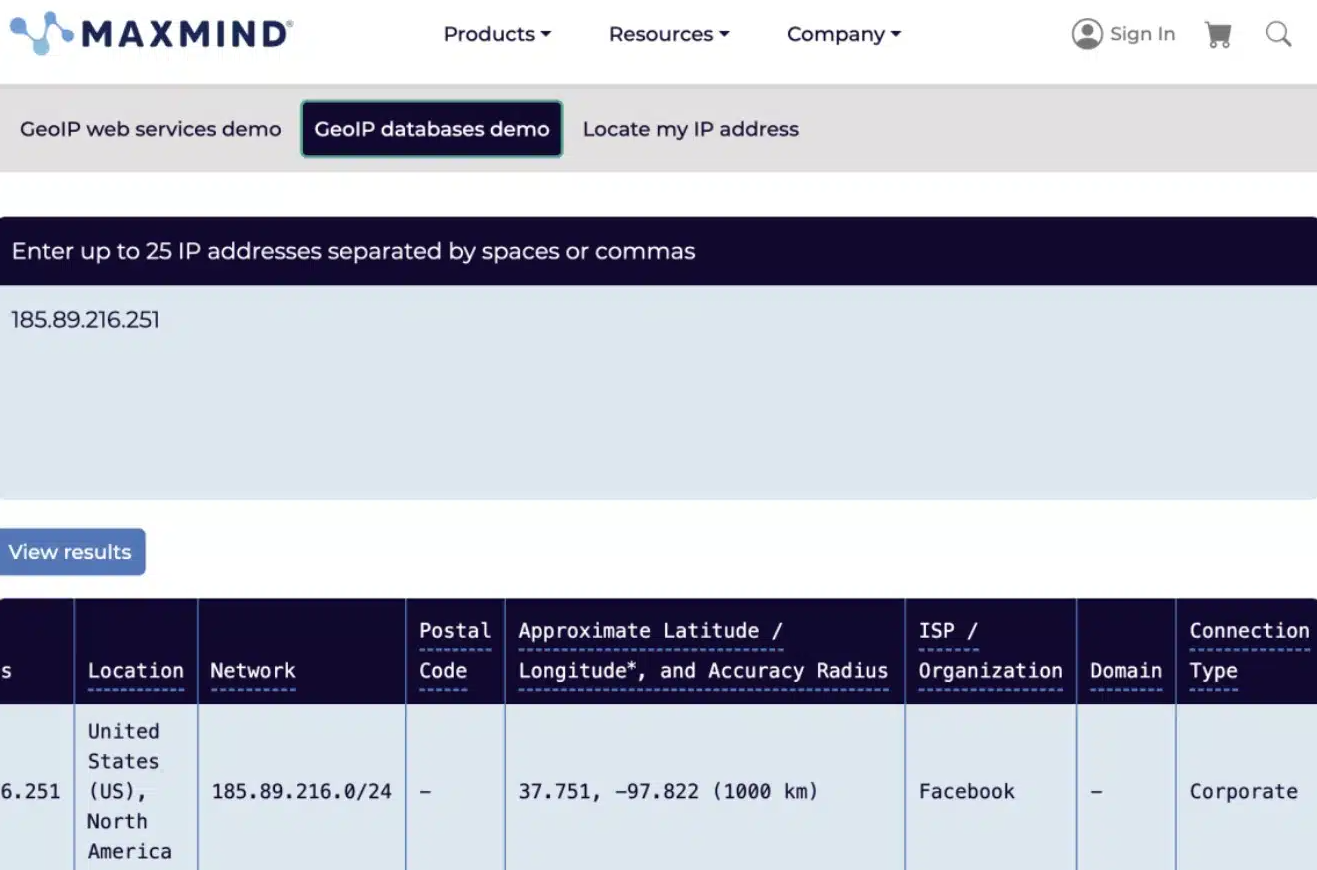
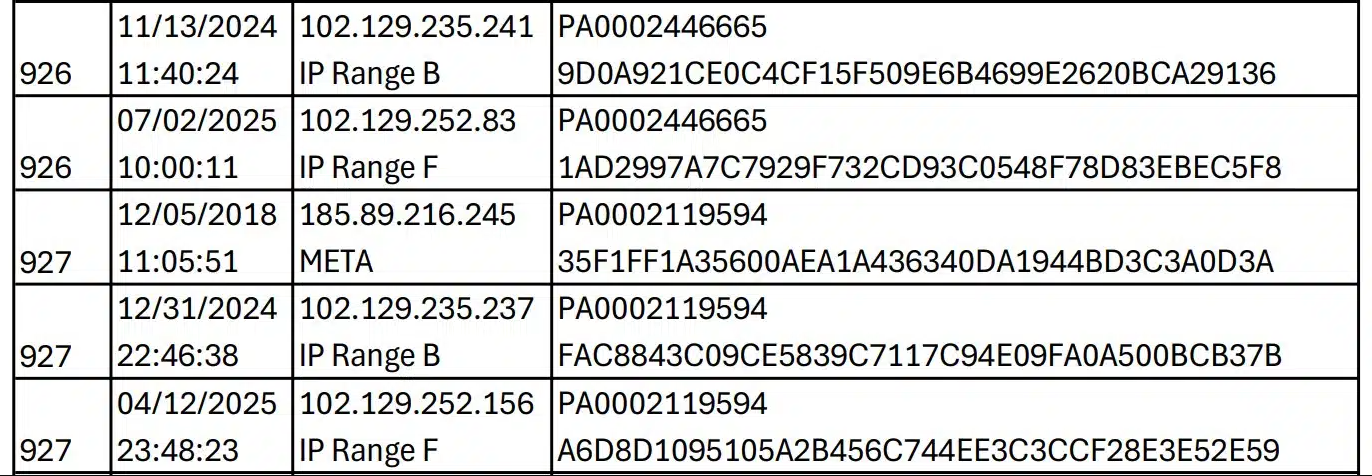
This prompted Strike 3 and Counterlife Media to search for IP addresses associated with Meta in their collection of BitTorrent data files. The scan revealed that 47 IP addresses identified as Facebook were suspected of violating their copyrighted works. Ownership of IP addresses was confirmed through the MaxMind database, and the petition provided thousands of alleged tort records from those addresses as evidence.
The author’s lawsuit also revealed that Meta allegedly used the “non-infrastructure” IP address to hide its BitTorrent activities. Adult producers believe that these secret IPs are also used to steal other works and identify several IP addresses that they consider relevant to the activity.
The connection of Meta IP addresses to third-party servers identified seven IP addresses that showed a relevant pattern of activity, including similar downloads and large-scale copyright infringement. “These linkages are also quantified as `non-infrastructure’ The behaviour of the IP address and that of the Meta enterprise IP address shows a non-human consistency model, which is obtained for AI training data and not for personal use.”
The complaint added that a Facebook employee had been identified to download content from Concast ‘ s IP address. The employee ‘ s name was concealed and the content was allegedly shared through the IP address of the Meta enterprise and the covert IP address.
On the basis of these allegations, Strike 3 Holdings and Counterlfe Media charged Meta with direct copyright violations and assisted violations and requested a jury trial. The copyrighter seeks statutory compensation, which may amount to up to US$ 150,000 per piece for intentional copyright infringement. In view of the fact that 2396 films were involved, the total potential compensation could amount to $359 million.
Meta has not yet responded to the proceedings and all the allegations have not been substantiated. This case may include a technical review of the VXN Scan tracking software (which is also used in many lawsuits against individual BitTorrent users). Strike 3 has a history of resolving copyright disputes through out-of-court settlements, so this result may also have occurred in the present case.