

The short play business has been playing an important role in enhancing user viscosity in the multiplication of electric power giants. In recent days, there has been a great deal of work to launch “short play production” jobs on recruitment platforms, which has led to speculation in the industry that there is a great deal of effort, or the first time, in the field of short play self-regulation, which marks a shift from a simple integration of resources to an autonomous production of content.
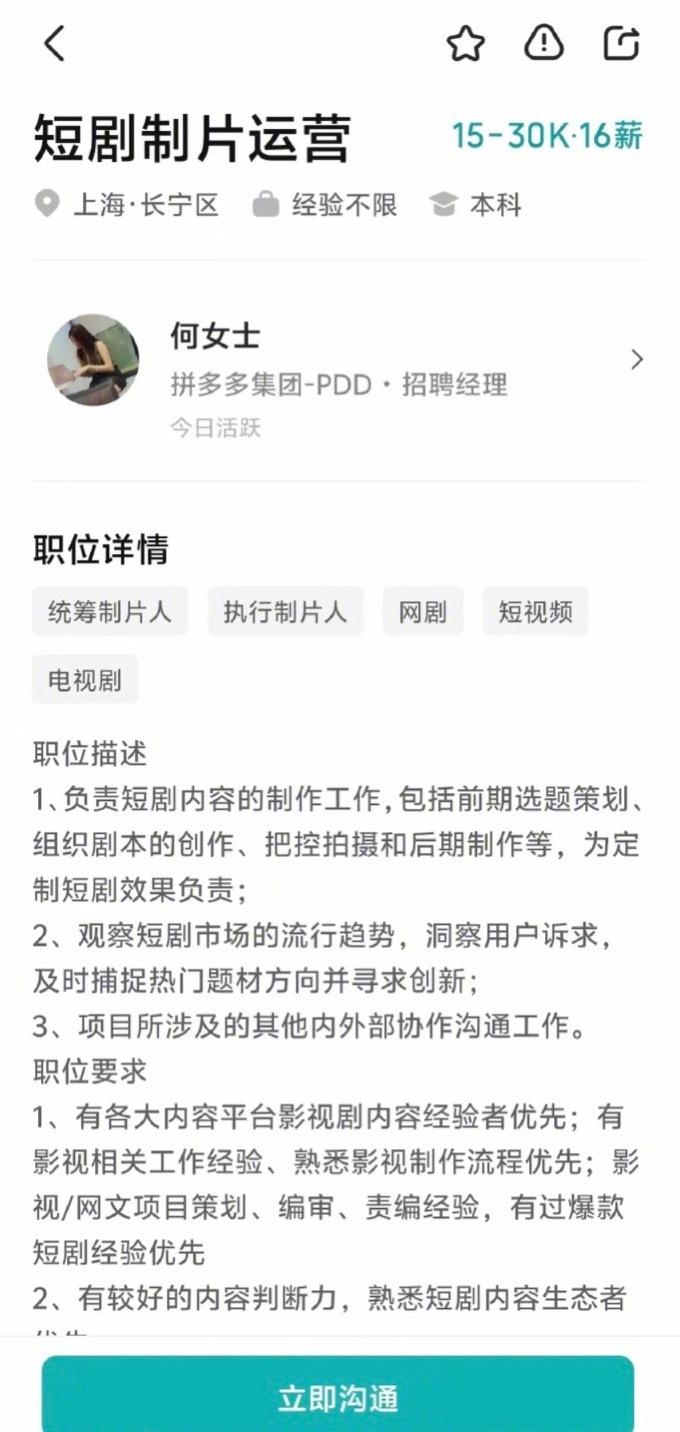
According to the recruitment information, the main duties of the post cover the entire process of short-scenario production, including the pre-selection design, organization of script creations, control of the filming process and later production. This requires that candidates have a comprehensive project management capacity that can be controlled from the whole chain of ideas to the finished product to ensure the quality and attractiveness of short play content. Priority candidates need to have video content experience from various content platforms (e.g. video platforms or video production agencies), especially those who have had experience with short-run drama production.
As early as 2019, realizing the potential of the short play as a high sticky content, the introduction of external short play resources began. Through such measures as traffic enablers and channel independence, many of the short plays are created as a stand-alone module within the platform, attracting users to stay long periods of time. However, in the previous layouts, much of this has never involved self-programming, but has insisted on the “buy-and-buy-and-share” model. At the heart of this model is the integration of external resources: the platform purchases short plays from content creators or producers, and stimulates partners through a split-up mechanism in order to quickly enrich the content base.

The advantage of such a strategy lies in efficiency and low risk. More than that, without having to bear the cost and uncertainty of content production, the entertainment properties of the platform can be enhanced by external high-quality short plays. The data show that the short play has become the current form of consumption preferred by young people, and that its fragmentation, high-density drama design is perfect for mobile end-user habits. This is an opportunity to use the short play as a “flowing tool” to direct users from their entertainment content to the electrician’s shopping and eventually to the electrician’s ecological flow.
While the short play business is more oriented towards support tools and non-core content production in a multiplicity of internals, its role cannot be underestimated. Through the short play, the platform can effectively extend the online time of users, increase the frequency of interaction, and ably combine the feature elements with commodity recommendations to achieve a “watch and buy” closed loop. For example, embedded commodity links or promotion activities in some short plays can be directly translated into a sales conversion rate. Today, the recruitment of short-time producers may be a sign of the deepening of many short-time strategies. By moving to home-made short play, the platform will gain greater content control and will be able to customize the drama to the user data and electrician needs to promote a more accurate flow effect.
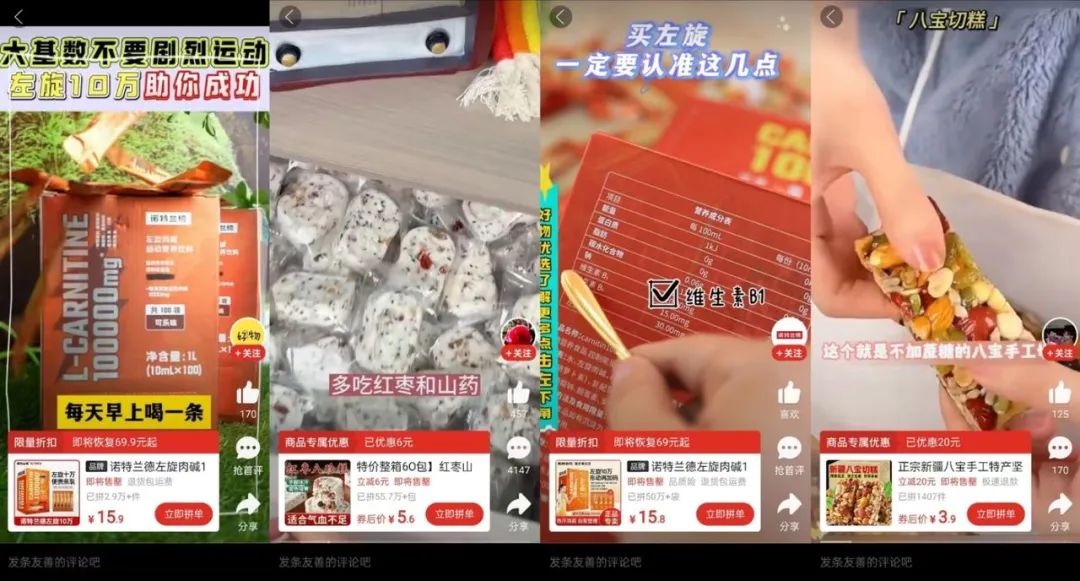
It will take time to test whether this plethora of moves will lead to a series of self-made short plays. In terms of recruitment requirements, however, it is clear that the Platform wishes to draw on the experience of professional expertise to move quickly into the field of content production. In the future, the short play may become a more competitive part of the multi-electrician ecology, not only to enhance user experience, but also to open up new realization pathways.