

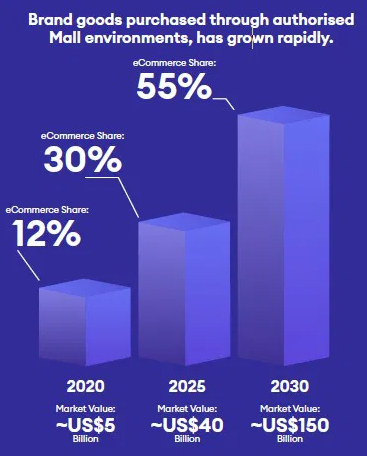
According to the latest regional study for Lazara conducted by Cube Asia, the data research institute for South-East Asia, South-East Asian electricians are firmly moving towards a new age of quality-driven shopping. This study, which covers 6,000 consumers in Singapore, Malaysia, Indonesia, Thailand, the Philippines and Viet Nam, shows that 90 per cent of online consumers currently visit the mall-style shopping environment, reflecting a surge in market demand for credible commodities, reliable performance and certified brands. The market share of “good-driven electric power suppliers” defined by the authorization to purchase branded goods through the mall environment has increased from 12 per cent of total electricity sales in 2020 to 30 per cent in 2025, corresponding to about $40 billion in market size. It is expected that by 2030 this category will account for 55 per cent of the retail value of South-East Asian electric operators, amounting to approximately $150 billion.
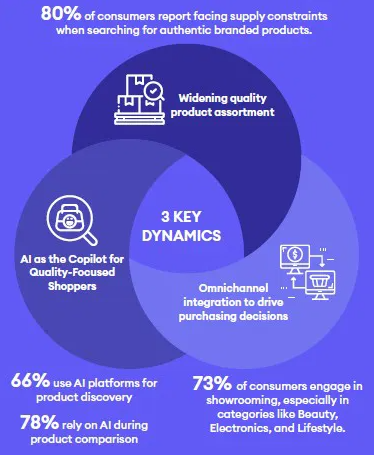
High-end trends are particularly evident throughout the region: 86 per cent of respondents meet the standards of active mall consumers (i.e., at least 20 per cent of online purchases in the near future have come from mall shops); 90 per cent of consumers are willing to pay a premium for real goods purchased in a credible environment, of which 31 per cent accept an additional 10 to 30 per cent mark-up. In Thailand and Viet Nam, there is over 90 per cent consumer penetration in commercial cities and about 80 per cent in Indonesia and the Philippines. Three key factors drive this trend: the spread of good brands, the deepening of full-source shopping and the growing importance of AI in commodity discovery and value for money. Over 80 per cent of consumers indicated that they faced a supply gap when searching for real goods, but 91 per cent had found over-expected overseas brands. The “swap-to-buy” model is also prevalent, with 73 per cent of consumers visiting physical stores before completing online transactions. AI had the highest rate of use in product detection (66 per cent) versus price (78 per cent), but only 16 per cent used it for final purchase decisions.
Research has shown that consumers in South-East Asia are moving towards an era of “consumer of confidence” — certified brands, quality assurance and reliable performance are increasingly key to purchasing decisions. Lazada stated that its investment in AI listening tools, automated marketing, personalization and full-source integration would help the platform to capture the new wave of “consumer of confidence” when quality purchases become a regional brand. Lazada’s president, Wei Moi, said: “The study has confirmed the validity of our brand-priority strategy and strengthened the commitment to build high-trust, quality-priority ecology for consumers and brands. As consumer demand for good goods grows, Lazada’s predominance in the commercial city’s ecology gives us a unique opportunity to lead the next stage of the growth of regional electricians.”
In fact, AI is continuously shaping the consumption expectations of electricians in the Asia-Pacific region. In a study of 24,000 consumers in 24 markets, the DHL electrician Trends Report 2025 found that 81 per cent of the AI functions, such as virtual trials, voice searches and smart shopping assistants, were expected, and nearly half (47 per cent) had been purchased using language instructions. The report emphasizes that AIT, social utility, distribution expectations and sustainability are redefining the core elements of winning users – – Virtual piloting, and the upgrading of AI’s assistant and voice search from a “fresh-up” to a mandatory tool has shown that investment in AI has become a necessary choice for retailers to remain competitive in fast-moving digital retail patterns.